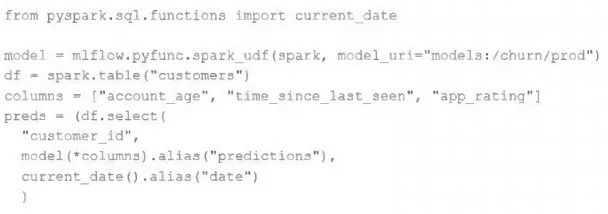
The data science team has created and logged a production model with MLflow. The following code correctly imports and applies the production model, producing predictions in a new DataFrame named preds with the schema "customer_id LONG, predictions DOUBLE, date DATE".
The data science team wants the predictions stored in a Delta Lake table so that all predictions can be compared over time. Churn predictions will be generated no more than once each day.
Which code block achieves this while minimizing potential compute costs?
Text version
from pyspark.sql.functions import current_date

model = mlflow.pyfunc.spark_udf(spark, model_uri="models:/churn/prod")
df = spark.table("customers")
columns = ["account_age", "time_since_last_seen", "app_rating"]
preds = (df.select(
  "customer_id",
  model(*columns).alias("predictions"),
  current_date().alias("date")
  )
)